
5 Tips for Buying Car Insurance for the First Time
There’s something different about driving a car that’s your own. From the personal touches in and on your vehicle to the title with your name on it, there’s a rush of pride and independence that comes with your very own car. Of course, car ownership also comes with a lot of responsibility—such as insurance. If it’s your first time purchasing an auto insurance policy, all the requirements, options, and other information can seem overwhelming. It doesn’t have to be, though. Once you have a clear idea of what you’re looking for, you’ll be able to find the perfect policy for you and your vehicle. To help you through the process, here are five tips for buying car insurance for the first time.
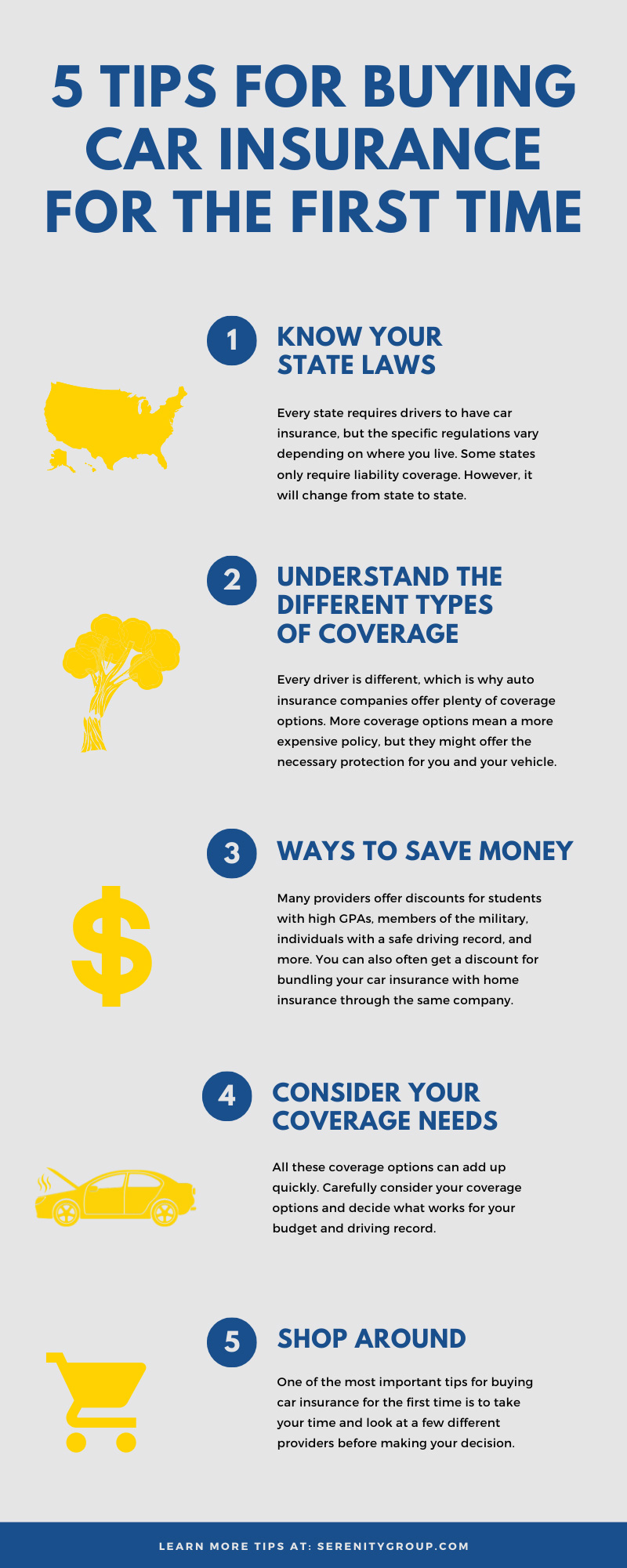
Know Your State Laws
Every state requires drivers to have car insurance, but the specific regulations vary depending on where you live. Some states only require liability coverage, which covers the costs for others and their property if you’re at fault for an accident; however, the minimum liability limits will change from state to state. Other states have additional coverage requirements, which you can read about below. Before you start shopping around for a policy, read up on your state’s minimum requirements so you know you’re meeting them.
Understand the Different Types of Coverage
Every driver is different, which is why auto insurance companies offer plenty of coverage options. More coverage options mean a more expensive policy, but they might offer the necessary protection for you and your vehicle. It’s important to understand what each of these coverages means so you can get the most out of your policy and money.
Bodily Injury Liability
Every state—excluding Florida—requires drivers to have bodily injury liability insurance. If you cause a car accident, this covers medical costs and other expenses for anyone else involved. The minimum liability requirement changes for each state, but most states have a requirement of $25,000 for bodily injury to one person and $50,000 for bodily injury to two or more people. If these are the coverage limits for your policy, it simply means that your insurance would pay up to $25,000 in injury costs to another person and $50,000 in costs for everyone involved in the accident.
Property Damage Liability
Property damage liability works the same way bodily injury liability does, except it covers damages to someone’s property rather than the injury of the individual. Every state in the U.S. has a minimum property damage liability cost, though it’s often less than bodily injury requirements. You can always purchase above your state’s minimum liability requirements, which is why it’s important to consider your options before making a final decision.
Personal Injury Protection
Unlike bodily injury or property damage liability, personal injury protection covers you and your passengers in the event of an accident. Details of the coverage vary depending on your state and insurance provider. In general, personal injury protection may cover medical bills, lost wages, and funeral costs. Only a handful of states require personal injury protection or similar forms of first-party benefit insurance.
Collision and Comprehensive
Both collision and comprehensive insurance are optional in the United States. They serve to help repair your vehicle or reimburse you if something happens to it. Collision coverage pays for car repairs after an accident. This policy also reimburses the value of your car if you total it in an accident. On the other hand, comprehensive coverage pays for damages your vehicle suffers outside of an accident. This can be storm damage, vandalism, theft, or collision with an animal.
Uninsured or Underinsured Motorist
If you’re in an accident with a driver who doesn’t have insurance, you might have to pay the medical bills yourself. Uninsured motorist coverage helps pay for these and other costs if an uninsured driver causes an accident. If the other driver has an insurance policy but it isn’t enough to cover your bills, underinsured motorist coverage can make up for what their policy doesn’t cover. Some policies also offer uninsured or underinsured property damage coverage, which reimburses you for vehicle repairs when the other driver’s policy cannot. About half of the states in the U.S. require uninsured or underinsured motorist coverage on your policy.
SR22 Insurance
SR22 insurance is a type of coverage for drivers with severe traffic violations such as reckless driving or a DUI. Almost every state requires drivers to add SR22 insurance (or a similar policy, such as FR44 insurance in Florida and Virginia) to their policy after a DUI or reckless driving charge. The exceptions are Delaware, Kentucky, New Mexico, New York, North Carolina, and Oklahoma. Like with bodily injury and property damage coverage, SR22 insurance rates depend on your state’s minimum liability requirements. Not all insurance companies offer SR22 insurance, but an online SR22 company such as Serenity Group can help you find a provider and policy that’s right for you.
Consider Your Coverage Needs
All these coverage options can add up quickly. Fortunately, there are a few different ways you can lower your rates and save money. Carefully consider your coverage options and decide what works for your budget and driving record. For example, a higher deductible means you’ll save money on your premium, but you would pay more out-of-pocket if you’re in an accident. You should also consider the market value of your car. If you have an older car, the cost of collision or comprehensive coverage might not be worth what your insurance provider would reimburse you if the vehicle becomes damaged or totaled.
Other Ways to Save Money
There are a few other ways to lower your car insurance rates. Many providers offer discounts for students with high GPAs, members of the military, individuals with a safe driving record, and more. You can also often get a discount for bundling your car insurance with home insurance or other policies through the same company. Here are a few other ways you might be able to save money:
- Take refresher courses, such as a defensive driving class
- Install anti-theft devices and other safety features in your vehicle
- Choose a paperless billing option
- Pay your premium in full rather than in monthly installments
Shop Around
One of the most important tips for buying car insurance for the first time is to take your time and look at a few different providers before making your decision. Most insurance companies will provide you with a free quote so you can compare prices and coverage options. Before committing to a company, consider your budget, your required coverage, and the type of coverage you want. Having all of these in mind will make it easier to find and choose a policy that fits you and your needs.




Recent Comments